Table Of Content

The entire industry has since used it as a serious wakeup call, and regulations regarding cruise ship stability standards have been made far stricter since. Cruise ships are incredibly stable on the water and can now accurately avoid the hazards and rough weather conditions that might force the ship to rely on its stabilization systems. If you’ve taken a cruise recently, you might have noticed that modern cruise ships look particularly top-heavy. These mega-ships are like floating cities, carrying up to 6000 passengers and 2000 crew members. While ocean voyages may have a history of being perilous, the design and build of ocean-going craft benefit from a history of scientific and engineering breakthroughs.
More than 2000 Mauritian Seafarers Stuck at Sea, Cries for help
Technically, yes, cruise ships “could” tip over or sink, but the chance of either happening is extremely low. If you’re ever looking at a cruise ship, noticing how tall and narrow they look, you might be thinking to yourself “can cruise ships tip over? However, the resulting stability means that cruise ships often move slower than boats with v-shaped hulls.
How Do Cruise Ships Float And Not Tip Over?
The safety and comfort of passengers and crew are paramount, and cruise ships are equipped to handle a wide range of weather scenarios to ensure a smooth and secure voyage. In addition to these active stabilization systems, passive stabilization measures are also implemented on cruise ships. Anti-roll tanks are compartments located on the sides of the ship that can be partially filled with water. This water movement within the tanks creates a stabilizing effect and reduces the rolling motions of the ship. Bilge keels, on the other hand, are elongated fins attached to the hull of the ship.
Best Charleston Dinner Cruises Ultimate Guide
Welcome to High Seas Cruising, your resource for exploring the exciting world of cruise ship travel. We provide expert advice, insightful reviews, and comprehensive guides to help seasoned and novice cruisers create their ideal sea journeys. Whether you desire adventure, luxury, or exploration, High Seas Cruising is your compass to unforgettable cruise vacations. When the seas are calm or the ship is in port, the stabilizers fold back into compartments along the ship’s hull. As an additional benefit, the smooth ride helps to prevent motion sickness on a cruise ship.
Are Cruise Ships Safe?
Cruise ships have long and narrow bows that help them cut through the waves more effectively. Combined, stabilisers and long bows help cruise ships to weather even powerful storms. Safe weight distribution is also ensured using sophisticated ballast systems that can take on seawater in various areas of the ship’s hull to immediately even out any imbalance. A cruise vacation can be one of the most relaxing and exciting experiences you ever have had, but you would not be able to enjoy yourself if you constantly worry that the ship might tip over and sink. If you have concerns about the safety and stability of cruise ships, you have come to the right place.
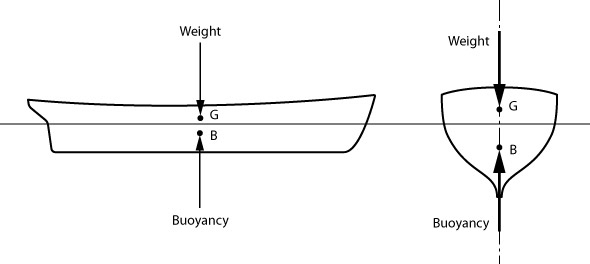
A square shape maximises space on board as well as making the ship more stable. I have a table with the drafts of many cruise ships in this article, so you can compare them. The upward buoyant force that is exerted on a cruise ship in the water is equal to the weight of the water that it displaces. Fortunately, all passengers and crew members were safely evacuated before the ship sank, thanks to the quick response and professionalism of the crew.
Trim refers to the longitudinal tilt of the ship, while list is the lateral tilt. These compartments ensure that even if water breaches one section, the entire vessel doesn’t become compromised. While coming back from my last cruise, I promised myself to solve this mystery and here I am ready to share all my findings with you. You will be amazed to know that cruising is one of the safest travel on this earth. So, we know the center of gravity will be towards the bottom, lower half of the ship. If everything in the ship weighed exactly the same, the center of gravity would be right in the middle.
Watch: Massive rogue wave batters cruise ship in North Sea - Fox Weather
Watch: Massive rogue wave batters cruise ship in North Sea.
Posted: Sun, 24 Dec 2023 08:00:00 GMT [source]
The topmost part of the ship maintains a ship’s buoyancy while the bottommost part weighs it down. Under the surface, cruise ships are equipped with wing-like stabilizers. These stabilizers help reduce the roll (sideways motion) of the ship. In cases of emergency or rough seas, the ballast tanks can be used to counter rough waves or high winds and minimize rocking. Additionally, cruise ships are designed with a lighter structure on the upper parts of the boat. The hull is thicker near the water line than at the upper levels.
If you dislike tipping on cruise ships but can't afford to sail on an all-inclusive line, look for promotions when cruise lines with service charges throw in free gratuities as a booking incentive. Coming back to our question that how cruise ships manage to stay upright and afloat in almost any weather? Do they probably have a massive and heavy underwater part that helps them to keep the balance? Usually no more than 30 feet (9.1 metres) of a vessel sits under the water, which is only about 10% of the ship’s overall height. The biggest mystery for some people is how does that big guy stay afloat and avoid Keeling over? Well, imagine something as large as the Empire State Building in length and 10 giraffes both in width and in height.
Ballast refers to the addition of weight, usually in the form of water, to adjust the ship’s balance and stability. By strategically manipulating the amount of ballast water on board, cruise ships can control their stability and ensure a smooth sailing experience for passengers. These tanks, located in the lower parts of the ship, can be filled or emptied with water to adjust the ship’s stability. In rough seas, additional ballast water may be added to increase the ship’s stability and reduce rolling motions. Conversely, in calmer conditions, some ballast water may be discharged to improve speed and maneuverability.
In practice, the safety margins are built into the design to ensure that even in extreme conditions, such as being hit by a massive wave, the ship would be able to right itself. If you’ve never been on a cruise, or watched The Titanic, you’re likely very curious about how safe a cruise ship truly is.. Do you feel guilty about not offering gratuities on an all-inclusive cruise ship?
The 2012 Costa Concordia tragedy, caused by human error, remains an exception rather than the norm, highlighting the safety measures in place to prevent capsizing.. An unsafe cruise ship would significantly harm the cruise industry’s business, so they prioritize ensuring a secure and safe operation. The ship hit a rock due to the negligence of the captain and took on water, causing it to fall to one side and eventually capsize. Ultimately it would take an extreme act or carelessness to flip a ship over.
While modern cruise ships are built to withstand rough seas, there is a limit to what they can handle. When faced with extremely strong winds and large waves, the ship’s stability can be compromised, leading to a potential capsize. Considering how big a lean 60 degrees would be, it shows how capable a cruise ship is of withstanding rough seas. Cruise ships are equipped with advanced safety technology and equipment to further enhance the safety of passengers and crew members.


No comments:
Post a Comment